
Online Baccarat in New Zealand: 2026 Guide
 Available in US
Learn how payouts and house edges differ, what online formats involve, and what New Zealand’s licensing transition means.

Table of Contents
- How Baccarat Bets and House Edges Compare
- What Real-Money Baccarat Play Involves
- New Zealand’s Online Casino Licensing Transition in 2026
- How an Online Baccarat Hand Plays Out
- Punto Banco, Mini Baccarat and Faster Tables
- Free Baccarat Practice Versus Real-Money Play
- Playing Baccarat Online Without a Download
- Crypto Baccarat: What This Guide Can Verify
- What Changes in Live Dealer Baccarat
- Can You Cheat or Improve Your Baccarat Results?
How Baccarat Bets and House Edges Compare
Baccarat offers three main bets: Player, Banker and Tie. A Player bet backs the Player hand, a Banker bet backs the Banker hand, and a Tie bet backs both hands to finish with the same value. The names identify the possible outcomes; they do not mean you are taking part in the dealing or choosing how either hand is played.
Each option combines a payout with a house edge. The payout describes what a winning bet returns relative to the stake, while the house edge estimates the casino’s mathematical advantage over many bets under the stated game conditions. It is not a prediction of what will happen in an individual round: a bet with a lower house edge can still lose, and a bet with a higher one can still win.
| Bet | Payout | House edge |
|---|---|---|
| Player | 1:1 | 1.24% |
| Banker | 0.95:1 after a 5% commission | 1.06% |
| Tie | 8:1 | 14.36% |
Choosing an online baccarat site in New Zealand calls for checking the details that matter to you before you play. This list provides a concise reference to the available operator information.
License: Malta Gaming Authority, licence no. MGA/B2C/370/2017 Play Grand lists a Malta Gaming Authority licence, number MGA/B2C/370/2017. That gives you a specific licence detail to consider.
Payout speed: 1-3 business days Lamabet lists a payout speed of 1–3 business days. You can use that detail when considering how quickly you want withdrawals processed.
License: Tobique Gaming Commission, licence no. 0000064 Neospin lists a Tobique Gaming Commission licence, number 0000064. This provides a specific licensing detail for your reference.
License: Tobique Gaming Commission, licence no. 0000002 Ricky Casino lists a Tobique Gaming Commission licence, number 0000002. The licence and number are the key available details to consider.
License: 07017519840 · Payout speed: 1-3 business days Zotabet lists the number 07017519840 and a payout speed of 1–3 business days. These are the available details to check when assessing the operator.
Payout speed: 1-3 business days Wintino lists a payout speed of 1–3 business days. This gives you a stated timeframe to consider for withdrawals.
License: Curaçao Gaming Authority, licence no. OGL/2024/165/0185 BitStarz lists a Curaçao Gaming Authority licence, number OGL/2024/165/0185. You can refer to this specific licensing information when reviewing the operator.
License: Tobique Gaming Commission, licence no. 0000091 7Bit Casino lists a Tobique Gaming Commission licence, number 0000091. This is the specific operator detail available for your reference.
License: Malta Gaming Authority, licence no. MGA/B2C/394/2017 N1 Casino lists a Malta Gaming Authority licence, number MGA/B2C/394/2017. This provides a specific licensing detail to consider.
These house-edge figures are for an eight-deck game with a 5% commission on Banker wins. They help compare the bets on a consistent basis, but they are not a promise about your results or the outcome of any particular session.
Player: straightforward payout, higher edge than Banker
A winning Player bet pays 1:1. In payout notation, that means the profit matches the stake; the original stake is also accounted for in the settlement. The payout is easy to read, but it does not tell you how often the bet wins or what you will get back over a short run.
The Player bet’s house edge is 1.24%. Compared with the Banker bet under the stated conditions, this is slightly higher. That difference is useful when comparing the two main hand bets, though it should not be mistaken for a guarantee that one will produce a better result for you in the next round. House edge describes a long-run mathematical comparison, not the order in which wins and losses will occur.
Banker: a commission affects the payout
A winning Banker bet pays 0.95:1 after a 5% commission. The commission is why the stated payout is not the same as the Player bet’s 1:1 return. When comparing the two, consider both the payout and the house edge rather than judging by the payout figure alone.
Under these conditions, Banker has a 1.06% house edge, lower than the Player bet’s 1.24%. That makes Banker the lower-edge choice of the two, on the figures given. It does not remove the chance of losing, and it does not make the bet a reliable way to earn money. The edge is a mathematical property of the wager, not a personal forecast.

The commission also matters when reading a baccarat table’s terms. A payout shown without its commission condition would not give you the whole comparison. Before placing a Banker bet, make sure you understand how the displayed payout and commission work together in that game.
Tie: the largest payout, and the highest edge
A Tie bet pays 8:1 if the result is a tie. That is a larger quoted payout than either Player or Banker, but a larger payout does not automatically make a bet more favourable. The house edge for Tie is 14.36% under the stated conditions, far higher than the edges for the other two bets.
This contrast is central to assessing the options: payout size and house edge measure different things. The payout tells you the return attached to a win; the house edge reflects the mathematical cost built into the bet over time. A high payout can look appealing while being paired with a less favourable edge. If you are comparing baccarat bets by expected value, the edge is the more useful measure of their relative long-run cost.
Reading the comparison before you choose
For someone learning how to play baccarat at an online casino, the three bet labels and their settlement terms are a useful starting point. Player and Banker are bets on one hand or the other; Tie backs the matching outcome. The figures show why it is worth checking more than the headline payout: Banker has the lowest stated edge despite its commission-adjusted payout, while Tie has the highest payout and the highest edge.
Attention: No bet turns baccarat into a predictable source of income; a lower house edge is a mathematical comparison, not a guarantee of winning.
No bet turns baccarat into a predictable source of income. A lower house edge means a smaller mathematical advantage for the house under the stated conditions, not that you will win or that losses cannot come quickly. If you choose to play, treat the figures as a comparison tool and decide in advance what you can afford to lose. A payout table can explain the terms of a bet; it cannot make the result certain.
What Real-Money Baccarat Play Involves
In a real-money baccarat round, you choose what outcome to back and place your wager before the cards are dealt. The standard Punto Banco choices are Player, Banker and Tie. “Player” and “Banker” name the two hands; they do not mean that you are taking control of either one. Your decision is simply which hand you expect to finish closer to nine, or whether you expect both hands to tie.
The betting window is the point at which you make that choice. Once the cards are dealt, betting for that round is closed. You cannot change a wager in response to a card or ask for another card on behalf of either hand. That makes baccarat a game of selecting an outcome before it is known, rather than adjusting a strategy as the round unfolds.

Choosing what to back
A Player bet backs the Player hand to finish closer to nine than the Banker hand. A Banker bet backs the Banker hand to do so. A Tie bet predicts that the two hands will finish with the same value. The names can be confusing if you are new to the game: placing a Player bet does not make you the player at the table, and betting on Banker does not give you authority over the deal.
Before wagering real money, make sure you can identify the three choices on the table and understand which one you have selected. This matters most when you are moving quickly between rounds or playing on a small screen. A wager on the wrong outcome is still the wager you placed; it is not treated as a prediction you meant to make instead.
The three options describe different outcomes, not three ways to influence the cards. Whichever one you choose, the hands are dealt according to the game’s rules. You are not selecting cards, choosing whether a hand draws, or directing the dealer. The only decision available to you in the standard round is which of the stated outcomes to back.
A round from wager to result
A typical online baccarat round follows a clear sequence. First, the table accepts bets. You select Player, Banker or Tie and set the amount you intend to risk. When you are satisfied with the selection, you confirm it while the betting window remains open. The cards are then dealt, the outcome is determined, and the round is settled before betting opens for the next hand.
Before Confirming Your Wager
- Select your outcome (Player, Banker, or Tie)
- Set the amount you intend to risk
- Confirm the chosen outcome and amount match your intention
- Ensure the betting window is still open
That sequence can feel simple, but the timing deserves attention. A round may move on before you have had time to reconsider, particularly if you are following several hands in succession. If you have not decided what you want to back, sitting out is different from placing a hurried wager. You do not need to bet on every deal.
In an online casino baccarat game, the display may show the current betting choices and the active wager before the deal begins. Treat that information as a chance to check your selection, not as a reason to make a bet you had not planned. Confirm that the chosen outcome and the amount shown match your intention. Once betting closes, the round proceeds without further input from you.
Real-money play also makes the size of each decision consequential. Set a limit for what you are prepared to lose before you begin, and avoid raising a wager simply to recover an earlier loss. A result in one hand does not make a particular outcome due in the next. Baccarat offers no control over the deal, so a series of wins or losses is not a reason to assume the next hand will behave differently.
If you are considering live baccarat for real money, the same basic betting choices apply: you back Player, Banker or Tie before the cards are dealt. The presence of a dealer does not turn the wager into a decision made during the hand. Keep your attention on the selected outcome, the amount at risk and whether the betting period is still open.
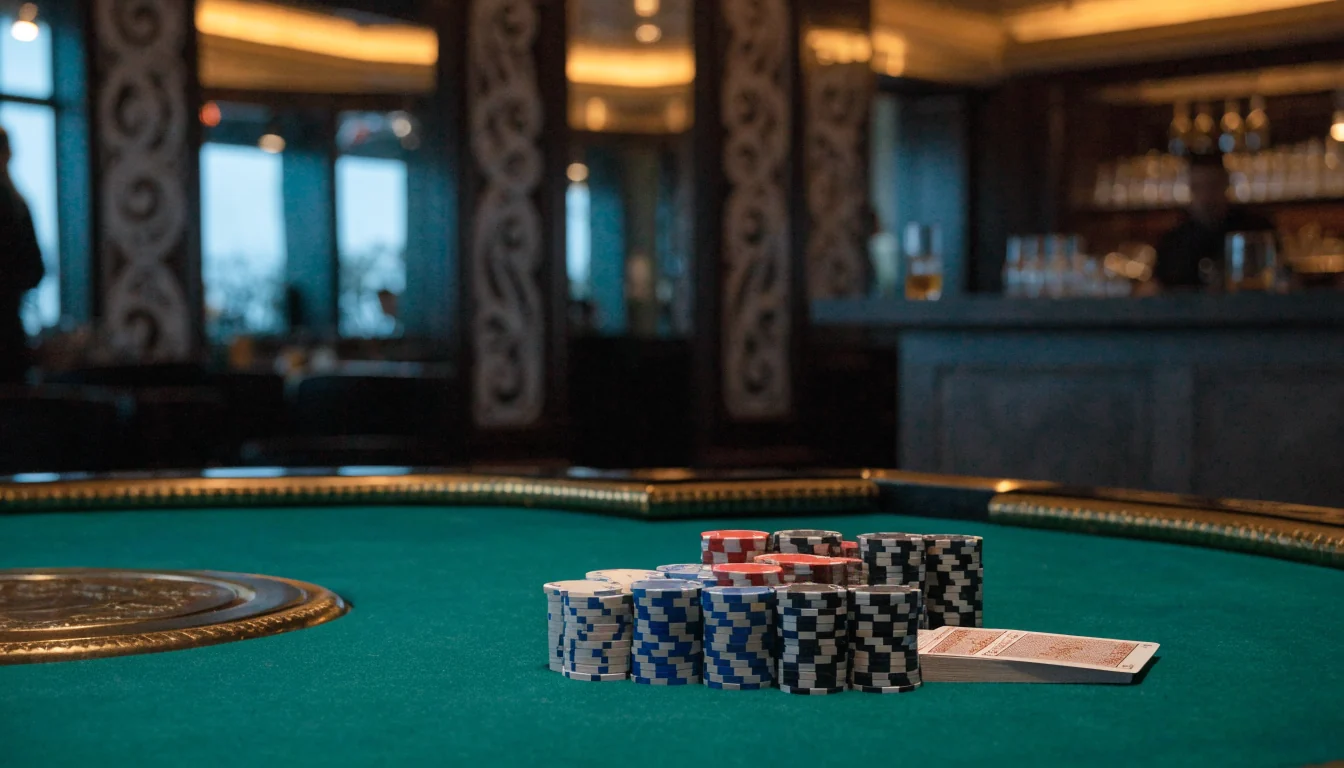
There is no special trick that changes what a Player, Banker or Tie wager means. The useful habit is more modest: know what each choice predicts, decide before the betting window closes, and check the wager before confirming it. If you cannot do that comfortably, pause rather than letting the pace of the table make the decision for you.
New Zealand’s Online Casino Licensing Transition in 2026
The Online Casino Gambling Act 2026 took effect on 1 May 2026, establishing a domestic licensing system for online casinos. For Kiwi considering online baccarat, the important point is that the transition does not mean every operator serving the country already holds local approval. No operator has a New Zealand Department of Internal Affairs (DIA) licence in 2026.
The Act sets out a staged change for operators. Those already serving people in New Zealand before it came into force may continue during the initial transition period, which runs until 1 December 2026. This is temporary permission under the transitional arrangements, not a New Zealand licence. The date matters to operators offering casino games, including baccarat, because it marks a change in the conditions for continuing to serve local customers.
What changes on 1 December
From 1 December 2026, an operator may continue under a temporary exemption only if it has applied for a licence and the application is still under consideration. The exemption is therefore a limited bridge through the licensing process, rather than a general extension for every business that previously accepted New Zealand customers.
Licensing Risk
From 1 December 2026, only licensed operators or those with a specific temporary exemption can legally serve New Zealand players.
The Act also provides that, from this date, only licensed operators can serve New Zealand players. Read alongside the temporary-exemption provision, the practical distinction is between a provider with a licence and one that qualifies for the specific transitional arrangement while its application is considered. A business that has not applied cannot rely on the application-related exemption to keep operating after the transition date.
For you, this makes the operator’s status more important than the presence of a baccarat table or the way a site describes its service. A familiar game name does not establish that the business holds a New Zealand licence, and the transition date alone does not turn an offshore operator into a locally licensed one. The 2026 position is especially time-sensitive: the licensing system has begun, but no operator holds a DIA licence during that year.
What the transition means for players
The change is directed at operators and the conditions under which they may serve New Zealand. Players are not penalised simply for continuing to use an unlicensed online casino. That does not make an unlicensed service equivalent to a locally licensed one, or provide the protections associated with a domestic regulatory framework. Before the Act, online casino services supplied from outside the country were not licensed or supervised by a New Zealand regulator, and customers had no domestic government recourse.
The transition also does not mean that local licensing should be assumed from an operator’s continued availability. An online casino that remains accessible may be operating under the temporary provisions, but access by itself is not proof of a licence. The relevant distinction is whether the operator is licensed or, during the transitional period, qualifies to continue under the exemption.

Operators are prohibited from advertising online casino gambling services to people in New Zealand during the transition period. This restriction applies even where a business was already serving customers before the Act took effect. The regulatory change is therefore not an invitation for operators to promote online baccarat in New Zealand while their licensing status is being determined.
In 2026, the rules are moving from a period without domestic online casino licensing to a system with defined local requirements. The key dates are 1 May, when the Act commenced, and 1 December, when the transitional arrangements narrow. For Kiwi, the safest reading is straightforward: continued access is not the same as a New Zealand licence, and an operator’s eligibility to continue after the transition date depends on the Act’s licensing and exemption provisions.
How an Online Baccarat Hand Plays Out
Baccarat hand values are simple to calculate once you know what each card counts for. An ace is worth one, cards from two through nine keep their face value, and a ten or any face card counts as zero. Add the values in a hand, then use only the final digit of the sum. The result is always a value from zero to nine.
For instance, a hand containing a seven and an eight adds up to fifteen, so its baccarat value is five. An ace alongside a nine makes ten, which gives the hand a value of zero. A ten and a king also total zero because both cards count as zero. These examples show why the full arithmetic sum is not the final hand value: only its units digit matters.
Calculating Hand Value
Add the values of the cards together (Aces are 1, 2-9 are face value, 10s and face cards are 0).
For example, a seven and an eight total fifteen.
Use only the last digit of the sum; fifteen becomes a baccarat value of five.
If more cards are dealt, their values are included in the same calculation. A hand with a five, a six and a four totals fifteen and therefore has a value of five. The calculation does not change as the hand develops; you add the card values and keep the last digit. You do not need to compare suits or treat a face card as higher than another card.
Suits have no effect on a baccarat hand’s outcome. A heart, club, diamond or spade does not add value, break a tie or change how the hand is calculated. What matters is the card’s baccarat value and the final digit of the total. This is different from games in which suit rankings can affect the result.
When a third card is dealt
The third-card decision follows fixed rules. It is not a choice you make during the round, and selecting a hand does not give you control over whether it draws. The rules determine whether another card is dealt, so online baccarat follows a set procedure rather than asking you to decide when a hand should stop.
One clear stopping point is a total of eight or nine after the first two cards: neither hand receives another card in that case. If the total is lower, you should not assume that a third card will always follow. The dealing decision still depends on baccarat’s rules, not on a player’s preference or a judgement about which card might improve the result.

That distinction matters when you are learning how to play online baccarat. You can follow the totals and see how each card changes them, but you cannot direct the deal. The game applies its fixed procedure, and the final values are then compared to determine which hand is closer to nine or whether the result is a tie. Understanding the arithmetic helps you read that outcome; it does not let you influence the cards.
A practical way to follow baccarat play online is to track each hand separately. Note each card’s value, add the values, and reduce the sum to its final digit. For example, a total of twelve becomes two, while a total of nineteen becomes nine. Then watch whether the fixed dealing rules call for another card. This step-by-step approach makes the round easier to understand without relying on suit patterns or trying to predict a draw.
The same rules apply whether you are watching an online round or following one for practice. Focus on the card values, the last digit of each total and the fact that the third-card decision is automatic. Once those pieces are clear, the changing totals are easier to follow.
Punto Banco, Mini Baccarat and Faster Tables
The name attached to an online baccarat table can tell you more about its pace and setup than about a different set of core rules. Punto Banco is the traditional and most common form. Mini Baccarat changes the table arrangement and dealer role, while Speed Baccarat is designed to move through hands more quickly. These formats can suit different preferences, but a faster or smaller table does not by itself change the basic nature of baccarat.
The traditional and most common format played with six to eight decks.
A low-stakes version featuring a smaller table where the dealer always acts as banker.
A fast-paced version designed to increase the number of hands played per hour.
Punto Banco: the traditional format
Punto Banco is played with six to eight decks. It is the familiar reference point for many online baccarat games, and the name is useful when you want to distinguish the standard format from a table labelled “mini” or “speed”. The game’s main structure remains straightforward: the table presents the usual baccarat choices, and the round follows its established rules.
For you, the practical consideration is whether the table’s pace and layout feel comfortable. A traditional table may present a fuller table setting than a mini version, but the format name alone does not tell you what stakes are available or how quickly a particular online table moves. Check the table information rather than assuming that every Punto Banco game has identical limits or presentation.
Mini Baccarat: a smaller table
Mini Baccarat is a low-stakes version with a smaller table. You cannot touch the cards, and the dealer always acts as banker. That makes the format distinct in its presentation and dealer role, while retaining baccarat as the underlying game.
The smaller table can make the action easier to follow on screen, especially when you prefer a less expansive layout. Its low-stakes description is a general feature of the format, not a promise about the limits at every online casino. The available stakes depend on the particular table, so look at its displayed conditions before joining.

Speed Baccarat: a quicker rhythm
Speed Baccarat is intended to reduce the time between hands. A specialist review reports that it roughly doubles the number of hands per hour compared with the slower pace it discusses. Treat that as a reported comparison, not a fixed rate for every table: the actual pace depends on the game and how it is run.
More hands in the same period can raise your hourly cost of play if you continue betting at a similar level. The faster rhythm may leave less time to pause and consider each decision, so it is worth choosing a slower table if you want more space between rounds. Speed changes the cadence, not the underlying baccarat format.
Optional side bets
Some online casinos offer additional wagers, including pair bets on either hand. A specialist review notes these as optional features; they are not a separate core baccarat format. Their availability and terms can differ by table, so check the displayed rules rather than treating a side bet as part of every game.
When comparing baccarat tables, focus on the format label, pace, layout and stated conditions. Those details help you choose a style that suits how you want to play, without assuming that a smaller table or faster name guarantees a particular stake or experience.
Free Baccarat Practice Versus Real-Money Play
Free baccarat practice lets you learn the rhythm of choosing a bet and seeing whether Player, Banker or Tie wins, without staking money. It can help you become familiar with the basic choices and keep track of your decisions. But a practice session is not a way to earn money, and success with pretend stakes does not establish that you will get the same results when money is involved.
- Use free play to learn the rhythm of the game
- Notice your own decision-making habits
- Use practice to understand house edge terms
- Mistake practice success for guaranteed real-money results
- Use a free table to test a “winning” strategy
- Assume familiarity with the interface provides an edge
The core bet types are the same: Player, Banker and Tie. Their house edges differ, so practice is also a chance to notice which bet you are selecting and what its stated terms are. In an eight-deck game with a 5% commission on Banker wins, the house edge is 1.24% on Player, 1.06% on Banker and 14.36% on Tie. Those figures describe the long-term mathematical disadvantage attached to each bet, not a prediction of what will happen in a particular hand or short session.
What practice can show
A free table can make the choices feel less abstract. You can observe how often you reach for one bet, whether you change your selection after a loss, or whether a sequence of outcomes tempts you to increase a stake. In practice, there is no financial stake to lose, which can make it easier to pause and examine those habits.
That does not make a free baccarat game a reliable test of an online baccarat strategy. A run of favourable results may simply be a run of results; it does not prove that a betting pattern has an advantage. Likewise, a losing practice session does not show that a real-money game is rigged. The outcome history alone cannot establish that. Treat claims of a system that guarantees wins with caution, and do not mistake familiarity with the interface for an edge over the house.

The house edge remains relevant even when you are only practising. It does not mean that every hand produces a loss, or that you can identify which hand will win. It is a mathematical measure over repeated play. The higher edge on Tie makes it especially important not to judge a bet solely by the size of its payout.
Where the comparison ends
Free play removes the financial consequences of a wager. It cannot reproduce the personal pressure of deciding what to do when your own money is at risk. Nor does a practice result promise a matching result in real-money play. Use it to understand the choices and notice your own decision-making, not to forecast winnings or justify a larger stake.
If you move from practice to real-money baccarat, the bet may look familiar, but the consequence is different: money can be lost. Set a limit before playing and stop when you reach it. If you find that you are chasing losses or struggling to stop, step away rather than treating more practice as a solution.
Playing Baccarat Online Without a Download
A browser-based baccarat table can be opened on a PC, tablet or smartphone without installing a separate game application, where that access option is provided. The game is still played online; the browser is simply the route to the table. Before opening one, check that the page is the intended game and that the controls are clear on the device you plan to use.
Browser-based baccarat allows access via PC, tablet, or smartphone without installing a separate application.
The screen may be arranged differently across devices. A PC gives you more room to see the table and its controls at once, while a tablet or phone presents the same information in a more compact layout. Take a moment to locate the betting area, the displayed cards and the round controls before joining a hand. If the layout is crowded or difficult to read, switching to a larger screen may make it easier to follow what is happening.
Playing without a download describes access, not the cost or terms of play. A browser table is not necessarily a free table, and the absence of an app does not tell you whether the game is offered for practice or for real money. Read the table’s labels and conditions rather than assuming that a page is free because it opened directly in a browser. A free online baccarat option, if available, should be clearly identified as such.
The card suits do not affect the result of a baccarat hand. A heart, club, diamond or spade has no separate value in deciding which hand is closer to nine. This remains true whether you view the cards on a PC, tablet or smartphone. Focus on the cards’ baccarat values and the total shown by the game; suit artwork is visual detail, not an extra factor in the outcome.
A browser interface can make it easier to move between devices, but it does not change the rules or outcomes of baccarat. The same game may look different on a smaller screen, so avoid tapping until you can identify the intended control. If a connection interruption occurs, check the displayed round status before taking any further action; do not assume that the hand has ended or that a selection has been registered solely because the screen stopped updating.

For a straightforward session, use a device on which the table is legible and its controls are easy to distinguish. Whether you call it browser baccarat or baccarat played without an app, the key point is the same: access method and hand outcome are separate matters. The browser may change how you reach the table, but it does not make suits relevant or turn a real-money table into a free one.
Crypto Baccarat: What This Guide Can Verify
“Crypto baccarat” combines two separate ideas: baccarat as a casino game and cryptocurrency as a possible payment method. The label does not describe a different set of baccarat rules. The established game still centres on the Player, Banker and Tie outcomes, and its card rules do not change because a website uses crypto-related wording.
That distinction matters if you are assessing an online crypto baccarat offer. The game’s rules and house edge tell you about the wager; they do not confirm which currencies an online casino accepts, how deposits or withdrawals work, or whether a particular operator supports crypto. Those details must not be inferred from a game title or a payment logo.
Payment method and legal status are also separate questions. A cryptocurrency option, if displayed, would not by itself show that an operator is authorised to serve people in New Zealand. The Online Casino Gambling Act 2026 introduced a domestic licensing framework and transitional provisions, so an operator’s position depends on the applicable rules—not on whether it offers crypto. A Kiwi should not treat a crypto payment route as a substitute for checking the operator’s status.
Attention: A crypto payment option does not prove that an operator is authorised to serve people in New Zealand under the Online Casino Gambling Act 2026.
There is also a practical difference between what can be assessed from baccarat rules and what depends on an operator’s own terms. You can compare the game’s stated bets and outcomes, but crypto-related conditions cannot be assumed to be uniform across online casinos. Before making any payment decision, read the operator’s current information carefully and make sure you understand what it says about the transaction and account conditions. If those details are unclear, do not rely on the phrase “crypto baccarat” to fill in the gaps.
In short, the phrase may indicate an intended connection between baccarat and cryptocurrency, but it does not establish payment availability, transaction terms or licensing. Treat those as distinct checks, and keep the game itself separate from the method used to fund an account.
What Changes in Live Dealer Baccarat
Live dealer baccarat replaces a digitally generated deal with a real dealer handling physical cards on camera. The table is streamed to your screen, so you can watch the dealing as it happens. The game still runs online, but its cards and dealer are physically present rather than represented solely by an animation.
RNG baccarat works differently: a random number generator produces the outcomes, which are displayed on screen without a live dealer handling cards. The distinction is about how the game is presented and how outcomes are produced, not a change to baccarat’s basic objective.
A specialist review names Evolution Gaming, Pragmatic Play and Playtech as providers of live dealer baccarat. That is a report from one review, not a guarantee that every online casino offers games from these providers. Availability can depend on the operator and its game selection.

The streamed format may make the round feel more like watching a table deal, while RNG play presents the result digitally. Neither format gives you control over the cards. Most importantly, choosing a live table does not by itself improve the mathematical terms: the house edge is the same for live dealer and automated baccarat. So the presence of a dealer on screen should not be treated as a sign that a bet is more favourable. Compare the actual game and its stated rules, rather than assuming the video format changes your chances.
Can You Cheat or Improve Your Baccarat Results?
Looking for a way to cheat at online baccarat is a poor route to a reliable outcome. The decision to draw a third card is set by the game’s rules, not by a player’s choice during the hand. There is no legitimate betting system that lets you override that decision or guarantee a win.
You can make a more informed choice by understanding that the main bets do not carry the same house edge. In an eight-deck game with a 5% commission on Banker wins, the house edge is 1.06% on Banker, 1.24% on Player and 14.36% on Tie. These figures describe the long-term mathematical disadvantage attached to each bet; they do not predict the result of a particular hand. A bet with a lower house edge can still lose, and a Tie bet can still win.
If you want to improve your decisions, focus on what you can control: which bet you place and whether you are comfortable with its associated edge. Treating a run of results as proof that the next hand is due to go a certain way does not change the fixed rules or the odds.
Set a limit before you play and stop when you reach it. That will not change baccarat’s mathematics, but it can help keep a losing session from becoming more costly than you intended. No strategy removes the house edge or guarantees a profit.
How do you play baccarat at New Zealand online casinos?
Before the cards are dealt, you bet on Player, Banker or Tie. The cards are then dealt according to fixed rules, and the hand whose value is closest to nine wins unless the hands tie.
Can you play baccarat online for real money?
Yes, you can place real-money wagers on online baccarat by choosing Player, Banker or Tie before the cards are dealt.
When do offshore casinos without a New Zealand licence have to stop serving New Zealand players?
Operators already serving New Zealand before the Online Casino Gambling Act 2026 took effect may continue until 1 December 2026. After that date, an unlicensed operator may continue under a temporary exemption only if it has applied for a licence and its application is under consideration.
What are the odds for baccarat online?
In an eight-deck game with a 5% Banker commission, the house edge is 1.06% on Banker, 1.24% on Player and 14.36% on Tie. Banker pays 0.95:1 after commission, Player pays 1:1 and Tie pays 8:1.
Published by the Casino Insider NZ team.