
Blackjack Casinos in NZ: How to Compare Tables
 Available in US
Blackjack options vary, so compare table rules, betting ranges, payout terms and format before deciding whether a game suits your play.

Table of Contents
- What Makes a Blackjack Table Worth Considering?
- Blackjack in New Zealand: Market and Licensing Context
- How Blackjack Works—and What Can Affect Your Decisions
- Electronic or Live-Dealer Blackjack?
- What to Check Before Playing at Higher Stakes
- Blackjack’s Card Values, Actions and Variants
- Casino Blackjack Payouts: Read the Table Rules
- Practical Blackjack Tips Before You Play
- How to Compare Casinos That Offer Blackjack
What Makes a Blackjack Table Worth Considering?
A blackjack table is worth considering when you can understand its conditions before you commit money, and when the way it is presented suits how you want to play. The aim is to finish closer to 21 than the dealer without going over, but the experience around the table matters too. A familiar game name alone does not tell you whether a particular option is a sensible fit.
Start with the information available on the table page. You should be able to find the rules, the available betting range, and any conditions that affect play without having to guess. If key details are difficult to locate, pause rather than assuming that another table will work the same way. Blackjack options can differ, and the information for one game should not be treated as a description of every game at a casino.
Clear conditions matter
Look for rules that are shown before you join, not only after a hand is under way. Read the details that apply to that specific table and check that you understand what choices are available to you. If the wording is unclear, use the casino’s help or support channel to ask for an explanation before playing. A confident answer should address the point you raised; a vague response is not a reason to proceed.
Choosing a blackjack casino in New Zealand means weighing the information available about each option. Use these concise verdicts to see which concrete details are provided and what you may want to check further.
License: Malta Gaming Authority, licence no. MGA/B2C/370/2017 Play Grand is listed with a Malta Gaming Authority licence, number MGA/B2C/370/2017. You can use that licence detail as a reference when assessing the casino.
Payout speed: 1-3 business days Lamabet lists a payout speed of 1–3 business days. You can consider this stated timeframe when reviewing its payment information.
License: Tobique Gaming Commission, licence no. 0000064 Neospin is listed with a Tobique Gaming Commission licence, number 0000064. You can check this credential as part of your review.
License: Tobique Gaming Commission, licence no. 0000002 Ricky Casino is listed with a Tobique Gaming Commission licence, number 0000002. This is the specific licensing detail available for you to consider.
License: 07017519840 · Payout speed: 1-3 business days Zotabet lists licence number 07017519840 and a payout speed of 1–3 business days. You can use these details when reviewing its licensing and payment information.
Payout speed: 1-3 business days Wintino lists a payout speed of 1–3 business days. You can take this stated timeframe into account when checking its payment terms.
License: Curaçao Gaming Authority, licence no. OGL/2024/165/0185 BitStarz is listed with a Curaçao Gaming Authority licence, number OGL/2024/165/0185. You can refer to this licence detail when assessing the operator.
License: Tobique Gaming Commission, licence no. 0000091 7Bit Casino is listed with a Tobique Gaming Commission licence, number 0000091. You can check this credential as part of your review.
License: Malta Gaming Authority, licence no. MGA/B2C/394/2017 N1 Casino is listed with a Malta Gaming Authority licence, number MGA/B2C/394/2017. You can use this licensing detail as one point to check.
The same care applies to offers and account terms. Always check the fine print and bonus conditions on trustworthy sites and casinos before playing with real money. In particular, see whether blackjack contributes differently to wagering requirements and whether maximum-bet rules apply while you are wagering. An offer can have conditions that change how you can use it, so do not treat a headline promotion as a complete account of the terms.
Check that the format suits you
A table can feel straightforward in one setting and uncomfortable in another. Consider whether you have enough time to read the information, follow what is happening, and make a decision without feeling hurried. If the pace or presentation makes it hard to concentrate, choosing another table—or not playing—is a reasonable response. You are not required to continue simply because you have already joined.
Also consider how you prefer to play and what you can comfortably spend. Set a budget before you start, and do not chase losses by adding money to try to recover what has gone. A budget is a boundary, not a target that needs to be used up. If you find yourself wanting to ignore it, take a break instead of making another decision at the table.
Treat convenience as only one factor
A polished page or simple sign-up process does not establish that a blackjack option is suitable. Give more weight to information you can verify: the rules for the table, the applicable terms, and whether you can get a clear answer when something is uncertain. If you cannot establish what you are agreeing to, leave the table until you can. This is especially important when an offer is involved, because its conditions may be separate from the game’s own rules.

It can help to separate your reasons for choosing a table. You might value a clear display, an unhurried pace, or rules you already understand. Those preferences are personal; they do not show that a table gives you a better chance of winning. No table choice removes the uncertainty of gambling, and a good-looking interface is not evidence of a favourable result.
When people look for a suitable blackjack casino in New Zealand, the useful question is not simply which name appears most appealing. Ask whether the specific game is understandable, whether its conditions are visible, and whether you can stay within your own limits while playing. If any answer is no, there is little reason to rush into a hand. A careful pause can help you avoid agreeing to terms or a pace that you would not have chosen with a clearer view.
Blackjack in New Zealand: Market and Licensing Context
The rules around online casino gambling in New Zealand are changing. That matters if you are looking for blackjack through a website: an online service accessible from New Zealand is not necessarily authorised under the country’s licensing framework. The framework is new, and its transition arrangements mean that the legal position depends partly on when a provider began operating and what steps it takes under the new law.
Attention: An online service accessible from New Zealand is not necessarily authorised under the country’s domestic licensing framework.
The Online Casino Gambling Act 2026 came into force on 1 May 2026, establishing New Zealand’s first domestic licensing regime for online casino gaming. The full licensed system is not expected to be operational until 2027, so the Act provides an interim period rather than an immediate switch to a fully functioning licensing market. During that period, providers that were already serving people in New Zealand before the Act commenced may keep operating until 1 December 2026, subject to the Act’s transitional provisions.
That permission is limited. It does not mean that every offshore casino is covered, that every provider has a licence, or that the existence of a blackjack table confirms regulatory approval. A provider that had not begun serving New Zealand customers before 1 May 2026 cannot rely on the transitional permission described above. For a reader, the practical point is to distinguish continued operation under a transition rule from approval under the future licensing system.
Who oversees the framework?
The Department of Internal Affairs is New Zealand’s primary gambling regulator and oversees regulation of the online casino licensing framework. Its role sits within the broader administration of gambling regulation in the country.
The Gambling Commission has a separate licensing function. It hears and determines casino licence applications, issues online casino licences and approves changes to licence conditions. In other words, the Commission makes decisions about applications and licence terms, while the Department oversees regulation of the framework. These roles are related, but they are not interchangeable.

That distinction can help you interpret claims made by gambling websites. A provider’s statement about its status is not itself a decision by the Commission. Nor does the Department’s oversight mean that every online casino accessible in New Zealand is supervised domestically. The new system is being phased in, and the licensing process has to be considered in that context.
What the transition means for providers
The transitional window runs from 1 May 2026 to 1 December 2026. Providers already operating in the New Zealand market before the start of that window may continue during it. To carry on beyond the transition, providers must follow the Act’s licensing process. A provider that has not applied for a licence must stop conducting online casino gambling in New Zealand by 1 December 2026.
Applying is not the same as being granted a licence. If an application is declined, the provider must end its online casino gambling operations in New Zealand and leave the market. Unlicensed operation is expected to become an offence around mid-2027. Providers operating without a licence may also face enforcement action and fines of up to NZ$5 million. These consequences concern operators, not a claim that a customer using an offshore site is committing an offence.
The change is significant because, before the 2026 Act, online casino gambling supplied from outside New Zealand was not licensed or supervised by a New Zealand regulator. A customer who wagered with an offshore website in that period had no domestic government recourse if a dispute arose. The creation of a local regime changes the regulatory framework, but it does not turn past offshore activity into locally supervised activity or make every current website licensed.
Legal Risks
Unlicensed operation is expected to become an offence around mid-2027, with providers facing enforcement action and fines of up to NZ$5 million.
What this means for players
Offshore casino websites may be accessible to people in New Zealand without being blocked, and a player does not face a fine or criminal prosecution simply for using an offshore casino without a local licence. Accessibility, however, is not the same as domestic oversight. In the earlier arrangement, customers using offshore sites had no New Zealand government body supervising that gambling service or providing domestic recourse.
During the transition, advertising to people in New Zealand is prohibited. Once licensed operators are operating under the new regime, advertising is permitted only within tight rules, and sponsorships are prohibited. The restrictions are part of the framework, not a sign that an advertisement or a familiar brand name proves a provider holds a licence.
The Act also requires licensed operators to use stricter age and identity verification systems. Those checks are part of the expected licensed environment; they should not be treated as evidence that a provider is licensed simply because it asks for identity documents. The relevant question is whether the provider has the required status under the system, not whether its website looks established or has a verification process.
If you are weighing up blackjack at an online casino while the transition is underway, avoid treating “available in New Zealand” as another way of saying “licensed in New Zealand.” The domestic licensing regime is being introduced in stages, and transitional permission has a defined end point. The Gambling Commission’s licensing role and the Department of Internal Affairs’ oversight role provide the structure for the new system, but individual providers must meet the Act’s requirements in their own right.

A careful reading of a provider’s licensing statements is useful, particularly where the site refers to an overseas regulator. A foreign licence does not, by itself, establish that a provider holds a New Zealand licence. Before the domestic regime is fully operational, the market includes transitional arrangements as well as offshore services that are not under New Zealand supervision. Keeping those categories separate helps you understand what local protections and oversight can—and cannot—be assumed to apply.
How Blackjack Works—and What Can Affect Your Decisions
Blackjack is a contest between you and the dealer. Your aim is to finish with a hand closer to 21 than the dealer’s without going over. The cards you receive shape your choices, but no decision can guarantee a win: the dealer’s hand and the cards still to come remain uncertain.
The basic values are straightforward. Number cards count at face value, picture cards count as 10, and an ace can count as either 1 or 11. Because an ace can change value to keep a hand from exceeding 21, a hand containing one may give you more flexibility. Understanding that flexibility is more useful than treating a single card or hand as a signal that a win is due.
The choices during a hand
When it is your turn, you can usually choose to hit, stand, double down or split, subject to the table’s rules. Hitting means taking another card; standing means keeping your current total. Doubling down involves increasing your stake while taking a further card, while splitting separates a pair into two hands. Each action changes both the hand you are playing and, in some cases, the amount at risk.
Available actions during a hand
- Hit: Take another card to improve your total.
- Stand: Keep your current total and end your turn.
- Double down: Increase your stake and take exactly one more card.
- Split: Separate a pair into two independent hands, which may require a further stake.
Those options are not interchangeable. Taking a card may improve a low total, but it can also take the hand over 21. Standing avoids that immediate risk but leaves the dealer to play out their hand. Doubling down commits more money at a moment when you have limited control over the next card. Splitting creates additional decisions, and it may require a further stake. Before acting, consider what the choice means for your hand and your money—not just the possibility of a better total.
The available action can depend on the specific table. A rule may allow or restrict a move in a particular situation, so do not assume every game treats it the same way. If a choice is unclear, pause to read the displayed rules rather than relying on a habit carried over from another table.
Decisions are not a promise of a win
People often look for a reliable way to win at casino blackjack. It is more accurate to think in terms of making decisions that fit the hand and the rules in front of you. A good decision can still be followed by an unfavourable card, and a poor decision can sometimes appear to work. One result does not prove that the choice was sound or that a winning pattern has emerged.
Nor does a large reported blackjack win provide a useful target for your own play. A headline result tells you little about the decisions, stakes or circumstances behind it, and it cannot predict what will happen at your table. Treat stories about the biggest wins as accounts of unusual outcomes, not as evidence that a particular approach can reproduce them.
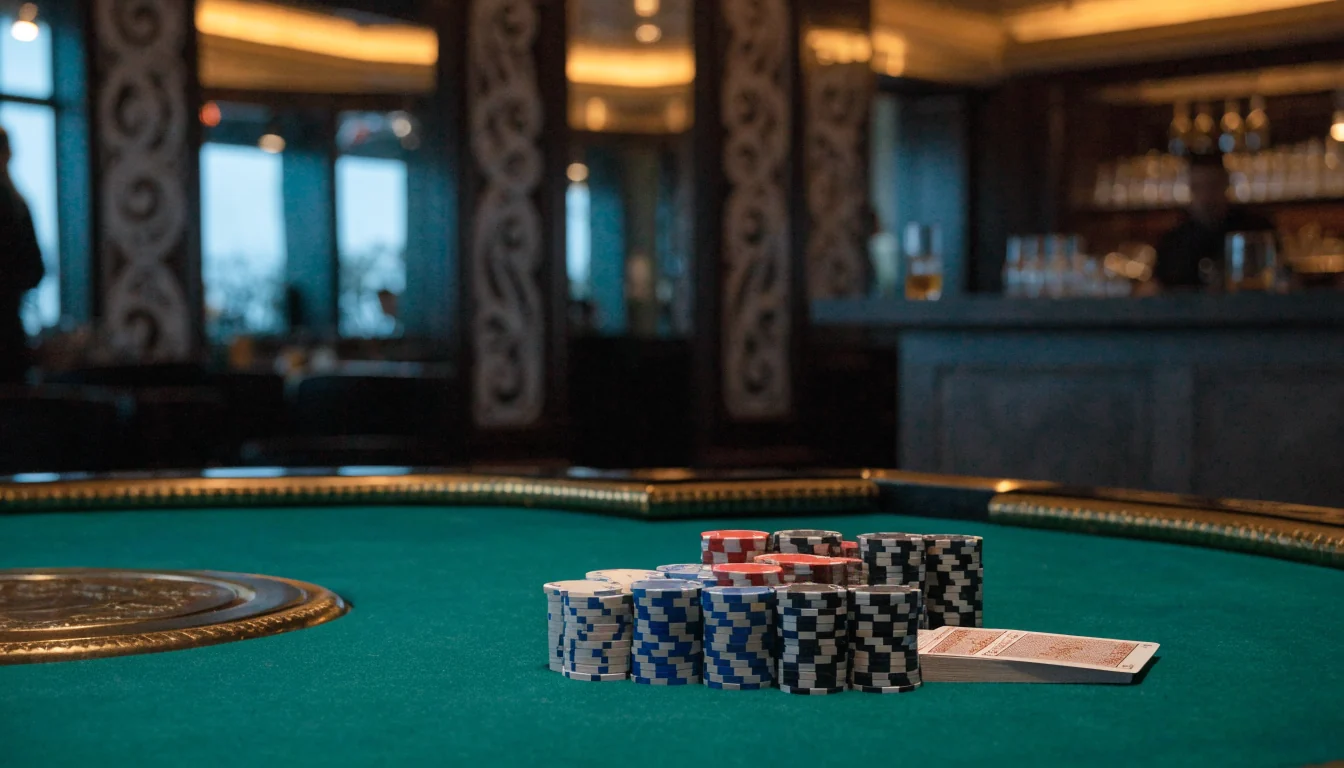
A payment method does not change the core decisions either. A bitcoin casino blackjack table is still blackjack: the card values, available actions and table rules determine how a hand works, not the currency used to fund an account. Keep the decision about playing separate from the decision about payment, and do not let the availability of a particular method make the risks seem smaller.
Card counting is sometimes discussed as a way of assessing which cards may remain. Mental card counting is not illegal under New Zealand law. That legal point should not be mistaken for a promise of effectiveness or profit. It does not remove uncertainty, alter the cards already dealt, or make every online format suitable for tracking cards. Avoid claims that a system can guarantee a win, and be wary of anyone presenting a betting pattern as a dependable route to one.
Keep control of the decision
Set a budget before you play and do not chase losses by raising your stakes in an attempt to recover them. A run of losses does not make a win more likely on the next hand. If you are playing with a promotion, read the fine print and bonus conditions on trustworthy sites and casinos before using it. Blackjack may contribute differently to wagering requirements, and maximum-bet rules can apply while wagering; check the terms rather than assuming every hand counts in the same way.
- Set a budget before you start
- Read bonus fine print and wagering terms
- Take a break if you feel rushed
- Chase losses by raising stakes
- Assume every hand counts toward wagering
- Ignore your budget boundaries
Insurance is another choice that can appear when the dealer shows an ace, but it should not be treated as a routine way to protect your play. For most players, avoiding insurance is the cautious approach. If the option appears, understand what it costs and what it covers before making a decision.
Blackjack rewards attention to the actual hand, the rules and the amount at risk—not confidence in a system or a past result. You can make choices deliberately while accepting that the outcome remains uncertain.
Electronic or Live-Dealer Blackjack?
Electronic blackjack and live-dealer blackjack can follow the same basic game, but the experience differs in how cards are handled and how quickly a hand moves. Knowing that difference can help you decide which format fits your preferences; neither format is a guarantee of better results.
Electronic blackjack
In an online RNG game, software shuffles the cards. Hands can move faster than at a live-dealer table because the game does not depend on a streamed dealer handling physical cards. If you prefer a quicker pace, electronic blackjack may feel more direct. That speed can also make it easier to play more hands in a short period, so set a budget before you begin and step away if you find yourself trying to recover losses.
The software determines the cards dealt, while you make your choices through the game interface. Check the rules displayed for the particular table rather than assuming every electronic version works the same way. Blackjack variants can differ, and those differences may affect how you approach a hand.

Live-dealer blackjack
Live-dealer games use actual cards handled at a table and shown over a video stream. The format can feel closer to sitting at a casino table, but the stream adds a practical dependency: a delay may interrupt the pace or make it harder to follow what is happening in real time. Your connection and the broadcast both matter to the experience, so a live game may not feel as immediate as software-driven play.
Some live tables may also require higher bets than electronic games. Check the table’s displayed conditions before joining, and do not assume that a live format is suitable for every budget. If the required bet does not fit the amount you have set aside, choose another option or do not play.
Choosing between formats
Think about pace, presentation and the conditions you are comfortable with. RNG blackjack offers faster play through software shuffles; a live table offers real cards but can involve streaming delays and higher bet requirements. Those are differences in format, not evidence that one option will produce a better outcome.
If you are looking for a blackjack table in a particular city, such as London, that is a separate location question from choosing between electronic and live play. For New Zealand readers, compare the format and the specific game rules available to you rather than treating a city-based recommendation as relevant by default.
Before playing for real money, read the table information and any bonus terms carefully on trustworthy sites and casino pages. Blackjack may count differently toward wagering requirements, and maximum-bet rules can apply while wagering. Make sure you understand those conditions before accepting an offer; a bonus does not remove the need to stay within your own budget.
Software-driven RNG games with faster play and software shuffles.
Actual cards handled by a dealer via video stream, offering a casino-like experience.
Electronic games offer speed, while live tables may have higher bets and streaming delays.
Whichever format you choose, keep the session within the amount you planned to spend. Faster play can make decisions arrive sooner, while a live stream can make the game feel more like a physical table. Neither changes the value of pausing when the experience stops feeling manageable.
What to Check Before Playing at Higher Stakes
A larger stake makes the terms of a table more consequential, so check the rules before you join rather than relying on a game’s title or appearance. A specialist review describes variation in deck count, how the dealer handles a soft seventeen, whether surrender is allowed, and the payout for a natural blackjack. Treat those details as table-specific: read the displayed rules for the game you intend to play, and confirm them again if you switch tables.
Pay particular attention to conditions that affect how a hand is settled. A table’s rules may change what happens in situations that look familiar, and a higher bet means more money is exposed to those differences. If the rules are unclear or hard to locate, choose not to play that table until you can check them. Do not assume that two games with the same name follow identical terms.
Live-dealer blackjack may also have higher bet requirements than electronic games. It uses physical cards, but the stream can introduce delays, which may make the pace less predictable. Check the table’s stated betting conditions and consider whether the pace and minimum stake fit the amount you have set aside. A table being labelled for larger bets does not make it suitable for your budget.

Before playing for real money, read the fine print and any bonus conditions on trustworthy sites and casino pages. Blackjack may contribute differently to wagering requirements, and maximum-bet rules can apply while you are wagering. A bet that is permitted outside a promotion may not be permitted under its terms, so check before accepting or using an offer.
Set a firm budget before you start and do not raise it to recover losses. Higher stakes can make it harder to pause after an uncomfortable result; deciding your limit in advance gives you a clear point to stop. If a table’s rules, bet requirements or promotion terms do not suit you, leaving it is a practical choice—not a missed opportunity.
Blackjack’s Card Values, Actions and Variants
In blackjack, the value of a hand depends on the cards you hold. Number cards count at their printed value, while jacks, queens and kings each count as ten. An ace can be worth one or eleven, whichever value works for the hand without taking it over twenty-one. Because the ace can change value, a hand containing one may be treated differently from a hand with fixed-value cards.
Your available actions shape how a hand develops. You can hit to take another card or stand to keep your current total. Doubling down means increasing your wager and taking a further card under the table’s conditions. If you receive a pair, splitting may let you play the two cards as separate hands, though the rules determine when this is allowed and what follows.
Card counting—the process of assessing which cards remain in the deck—is not illegal under New Zealand law, though it does not guarantee a win.
These choices are part of the basic structure of blackjack, but they do not operate identically at every table. Rules can determine whether you may split particular pairs, take additional cards after splitting, or double down in a given situation. Some games also offer surrender, which allows you to give up a hand under specified conditions. Check the rules shown for the particular game before you begin; the action available to you can depend on its version.
Blackjack variants can change more than the table’s appearance. They may alter rules that affect which decisions make sense and the house edge. A strategy suited to one version may not transfer neatly to another, so avoid treating all blackjack casino card games as interchangeable. The name of a variant alone may not tell you every condition: read the game’s rules and pay attention to differences in how actions are handled.
A steady approach is to learn the card values first, then understand the options available in the version you are playing. If a rule is unclear, pause before placing a wager rather than assuming another table works the same way. These fundamentals help you follow the hand; they do not remove the uncertainty of the outcome.
Casino Blackjack Payouts: Read the Table Rules
A natural blackjack can be paid differently from an ordinary winning hand, so the payout printed for the table matters. A specialist review describes 3:2 as one natural-blackjack payout and notes that some tables instead offer 6:5. Treat those as reported options, not as a promise about every casino blackjack game: the rule displayed for the specific table is what you need to check.
The difference is meaningful because the payout determines what a qualifying natural returns relative to your stake. A lower payout reduces that return even when the hand qualifies in the same way. Before joining a table, look for the blackjack payout in its rules panel or help screen. Do not assume that two games with similar names, layouts or dealers share the same terms.
Payout is only one part of the table rules. A specialist review also notes that games can differ in deck count, whether the dealer hits or stands on soft 17, and whether surrender is allowed. These conditions can change how a hand plays and which decisions are available. Check them alongside the natural-blackjack payout rather than judging a game by its headline payment alone.
Read the table information before placing a bet, and confirm that it applies to the game you have opened. Where several tables are offered, their rules may not match. If the payout wording is unclear or the rules panel does not appear to describe that table, pause rather than relying on assumptions or a general casino information page.
Keep any advertised promotion separate from the table’s own payout terms. If you are considering a bonus, read its conditions before using it: blackjack may count differently towards wagering requirements, and maximum-bet rules can apply while wagering. The table’s payout and the promotion’s terms are separate conditions, and neither should be inferred from the other. A careful check before play gives you a clearer picture of what a natural blackjack pays and which rules will govern the hand.
Before Joining a Table
- Check the natural blackjack payout (e.g., 3:2 vs 6:5)
- Verify the deck count and dealer’s soft 17 rule
- Confirm if surrender is allowed
- Review bonus wagering and maximum-bet rules
- Set a firm budget for the session
Practical Blackjack Tips Before You Play
A steady approach starts before the first hand. Decide what you can afford to lose, set that amount aside as your budget, and stop when you reach it. A run of losses can make it tempting to increase bets or keep playing to recover what has gone. Neither changes the outcome of earlier hands; chasing losses can instead put more money at risk.
Before playing, read the table’s rules so you know which choices are available. Depending on those rules, you may be able to hit, stand, double down, split or surrender. Check the conditions for each action rather than assuming every table handles it the same way. If a decision is unclear, pause to review the rules instead of acting under pressure.
Treat each hand as a decision, not as a chance to follow a system that promises a win. A betting pattern cannot guarantee an outcome, and changing your stake after a loss does not make the next hand safer. Keep your decisions within the budget you set, even when you feel that a win is due.
Be cautious about insurance. For most players, it is better not to use it as a bet; consider the table rules and your understanding of the offer before making that choice. Do not let a prompt or a short decision window push you into a side bet you have not considered.
If you are playing with a bonus, read the fine print and conditions on trustworthy sites and casinos before using it. Blackjack may count differently toward wagering requirements, and maximum-bet rules can apply while you are wagering. Those terms can affect how you use the bonus, so check them before you start rather than relying on an assumption.
Take a break if you feel rushed, frustrated or focused on winning back money. Blackjack offers choices during a hand, but no choice removes the financial risk. A clear stopping point and a careful reading of the rules are more useful safeguards than any claimed winning system.
How to Compare Casinos That Offer Blackjack
When comparing casinos with blackjack, look beyond the game’s title. Two tables with the same name may use different rules, and those differences can affect both the decisions available to you and the house edge. Compare the rules for each specific game rather than assuming that every blackjack table at one casino—or across different casinos—plays alike.

A specialist review reports that deck count, the dealer’s approach to soft 17, surrender availability and blackjack payouts can differ between games. Treat that as a reason to check the current table information, not as a description of every casino. Look for the rules before opening a table, and check them again if you switch to another version. If an important condition is unclear, do not rely on the game title or a general description to fill in the gap.
Pay attention to how the rules work together. A change to the dealer’s soft-17 rule or surrender option can affect which decisions are available or appropriate; payout terms also matter when comparing tables. Variants may alter several rules at once, so a familiar-looking game is not necessarily equivalent to another version. There is no single comparison that suits every player: the useful question is whether you understand the conditions and are comfortable with their effect on play.
Keep the comparison focused on the game itself. Check whether the listed rules apply to the exact table you intend to use, and read the operator’s terms where they relate to play. If you are considering a bonus, review its fine print and conditions on trustworthy sites and casinos before playing with real money. Blackjack may count differently towards wagering requirements, and maximum-bet rules can apply while wagering. Do not assume that a bonus makes one table a better choice.
A clear side-by-side note of the rules can help you spot differences without relying on memory. Record the conditions that matter to you, then choose only if they are understandable. Set a budget before you play, and avoid chasing losses; changing tables cannot remove the financial risk of gambling.
Prepared by the Casino Insider NZ editorial staff.