Live Casinos in New Zealand: Rules and How to Play
 Available in US
A practical guide to live table games, site checks, payment options and the rules governing online casino play in New Zealand.

Table of Contents
- New Zealand’s 2026 Online Casino Rules and the December Cut-off
- What Live Casino Play Looks Like on Screen
- How Blackjack, Roulette and Baccarat Differ
- Using Bitcoin at a Live Casino
- What to Check on a Live Casino Site
- Playing Live Casino Games from New Zealand
- Real-Money Play and the Limits of Free Live Games
- Betting Windows at Live Tables
- Live Tables on Mobile and How Card Scanning Works
- How Long Live Casino Withdrawals Can Take
New Zealand’s 2026 Online Casino Rules and the December Cut-off
The Online Casino Gambling Act 2026 came into force on 1 May 2026, establishing New Zealand’s first domestic licensing framework for online casino gambling. Its effect is significant for live dealer tables: they fall within the same online casino licence category as online pokies and digital table games. A live table is not treated as a separate kind of gambling service for licensing purposes.
The Act allows no more than 15 licences across the online casino sector. That cap applies to the sector as a whole, rather than creating a separate allocation for live dealer casinos. An operator offering several types of online casino games would therefore be covered by the relevant online casino licence category, not by a special licence just for its live tables.
This also means that New Zealand does not have a Kiwi-specific gambling licence. The new framework is a domestic licensing system for online casino providers, not a separate licence for each game format or a licence that operators can describe as uniquely Kiwi. For you, the practical question is whether a provider is permitted to operate under the New Zealand regime once the transition ends—not simply whether it offers live play or has held a licence somewhere else.
What changes during the transition
The Act created a transition running from 1 May to 1 December 2026. Online casino providers that were already serving people in New Zealand before the Act took effect may continue during that period under the transitional provisions. This gives the market a defined interval to move from its previous position to the new domestic licensing system.
The cut-off changes what providers may do next. From 1 December 2026, only operators approved under the new regulations may legally accept Kiwi players. The permitted number is capped at 15, so the date is not simply a point at which every existing provider automatically gains permission to continue. Approval under the New Zealand framework matters.

The transition also distinguishes providers according to whether they have applied for a licence. Providers that do not apply must stop serving New Zealand players by the cut-off. A provider with an application still pending may continue operating until the Department of Internal Affairs reaches a decision, but it must not advertise during that period. If an application is declined, the provider must cease its online casino operations in New Zealand and leave the market.
For a player, these rules make 1 December a meaningful dividing line. Before then, qualifying existing providers may continue under transitional arrangements; after it, legal permission to accept Kiwi players depends on approval, subject to the stated process for pending applications. A provider’s availability before the cut-off should not be taken as proof that it will be permitted to remain afterward.
Live dealer tables are included
The same framework applies whether an online casino offers digital games, live dealer tables or both. The live format does not sit outside the Act just because a dealer and physical equipment are involved. If an operator accepts New Zealand players for online casino gambling, its live dealer offering falls within the licensing framework alongside its other online casino games.
That point is worth keeping in mind when comparing sites. A provider cannot be considered outside the new rules merely because a particular table is streamed from a studio or described as live. The relevant issue is the operator’s status under New Zealand’s online casino regime. Nor does the sector-wide limit mean that live tables have their own separate quota of licences: the cap covers online casino licences, including those that permit live dealer games.
The transition concerns operators and their permission to serve customers, rather than a change to the basic description of the games. Live dealer tables remain part of online casino gambling, and they are subject to the same licensing category as online pokies and digital table games. The date to remember is 1 December 2026, when the transitional period ends for providers without an application and the new approval requirement governs who may legally accept Kiwi players.
Legal Deadline
From 1 December 2026, only operators approved under the new domestic licensing framework may legally accept New Zealand players.
What Live Casino Play Looks Like on Screen
A live dealer game is not an animation of a table. It is a real game captured on video: a professional dealer handles physical equipment in a studio or a casino, and the stream brings that table to your screen. You watch events unfold as they happen, rather than seeing a result generated as part of a computer-only game.
That difference is the defining feature of live casino play. The cards and wheels are real, and the person dealing is present at the table. The software connects the broadcast to the game interface, giving you a way to follow the session and interact with the dealer while the game is in progress. The experience combines a filmed table with digital controls; it is not simply a video playing separately from the game.
The table is a real place
Live dealer games are filmed in professional studios or at a casino based in a particular country. In either setting, the table is physical and the dealer conducts the game in front of the camera. Real cards are used in card games, and a real wheel is used in roulette. The equipment you see is part of the game itself, not a visual effect created by the software.
A studio is designed to support a live broadcast, while a casino-based table is located within a working casino. The setting may therefore look different from one broadcast to another. What remains consistent is the basic format: a real dealer and real table equipment are filmed, and the resulting live feed is delivered to players.

This can make the format feel more immediate than a digital table game. You can see the dealer handling the physical elements, rather than watching symbols or a simulated hand appear on screen. The camera provides a view of the action, while the software presents the interactive part of the experience. Both are needed: the video shows what is happening at the table, and the interface lets you take part remotely.
How the video and interface work together
When you open a live table, the broadcast occupies the main viewing area. The dealer and table are shown through a live video feed, while the game’s digital interface sits alongside or around the picture. The precise screen layout can vary, but the purpose is to let you watch the physical game and use the available controls without treating them as separate activities.
The feed is live, so the interaction takes place during the ongoing session. You are not watching a recording of a completed game. A professional dealer conducts the table in real time, and players can interact with that dealer through the game interface. This is what gives live dealer games their distinctive social element: there is a person on the other side of the broadcast, rather than only software responding to your choices.
That interaction should not be confused with being physically present at the table. You are still playing through a screen, and the dealer is communicating through the live format. The video gives you a view of the table; the interface provides the route for participating. Together they make a remote game resemble a table session more closely than a purely digital version can.
What to notice when you watch
The useful question is not whether a broadcast looks elaborate, but whether you can clearly follow the real table and understand how the video relates to the game interface. The dealer, the equipment and the ongoing play should be presented as parts of one live session. If you cannot tell what is happening at the table, the central benefit of the live format becomes harder to appreciate.
For Kiwi players comparing live dealer casinos, the phrase “live” refers to this real-time broadcast and interaction—not to a promise about a particular studio, camera presentation or level of service. A casino live table still depends on a physical dealer and equipment being filmed, even though you access it through software. The visual presentation can differ, but the underlying format remains a real game streamed from a studio or casino.
This is also why live play has a different feel from a game that runs entirely on a computer. You see a professional dealer managing physical cards or a wheel, and the video lets you follow the session as it unfolds. You are not required to interpret the game as a simulation of a table; the table is there, and the screen is carrying its activity to you.
The format is best understood as a combination of three elements: a real table, a professional dealer and a live video connection with an interactive interface. If one of those elements is unclear on screen, take a moment to orient yourself before joining the play. Knowing what you are watching makes it easier to distinguish the physical action from the digital tools used to participate.
How Blackjack, Roulette and Baccarat Differ
Blackjack, roulette and baccarat may all be offered as live table games, but they ask you to make different kinds of decisions. Blackjack is a contest against the dealer, roulette centres on the result of a spin, and baccarat asks you to predict which of two hands will finish closer to a target. Knowing these differences helps you choose a game whose pace and decisions suit you, rather than treating every table as the same experience.

Blackjack: play against the dealer
In live blackjack, your hand is compared with the dealer’s. The aim is to finish with a total closer to 21 than the dealer, without going over 21 yourself. Going over means you lose, even if the dealer later also has a high total. The game therefore involves responding to your own cards while considering how the dealer’s hand may develop.
At each decision, you are choosing how to proceed with your hand under the table’s rules. That makes blackjack more interactive than a game in which you simply select an outcome and wait for it to be determined. Your decisions matter to the course of your hand, but they do not remove chance: the cards dealt still shape what is possible.
Live blackjack can also feel slower than blackjack played against a random-number generator. In a live table, you may need to wait while other players make their decisions and the dealer takes their turns. If you prefer a quick sequence of hands, that pause is worth considering. If you are comfortable following the table’s shared pace, the player-versus-dealer structure may be a better fit.
A contest against the dealer where you aim to finish closer to 21 without going over.
A game centered on a wheel spin where you wager on a specific outcome.
A game where you predict whether the player hand or banker hand will finish closer to 9.
Roulette: stake a wager on the spin
Roulette is organised around the result of a wheel spin. Rather than trying to build a hand, you place a wager on an outcome and wait to see where the ball settles. The basic decision is what result to back; the wheel then determines whether that wager wins.
The house edge differs between European and American roulette. For live European roulette, it is around 2.7%; for live American roulette, it is around 5.26%. These figures describe the mathematical advantage held by the casino over time, not a prediction of what will happen in an individual round. A player can win a particular spin, but the house edge means the game is not balanced in the player’s favour across continued play.
The distinction between the two versions matters when comparing tables. The listed edge for American roulette is higher than the figure for European roulette, so the version available is a useful detail to check before placing a wager. Do not read either percentage as a promised loss on a single bet: it expresses a long-run relationship, while each spin has its own result.
Baccarat: predict the stronger hand
Baccarat has a simpler central question: will the player hand or the banker hand finish closer to 9? You can bet on either side, and a draw is also a possible outcome. The names “player” and “banker” identify the hands; they do not mean that you are personally playing against another customer or taking the dealer’s role.
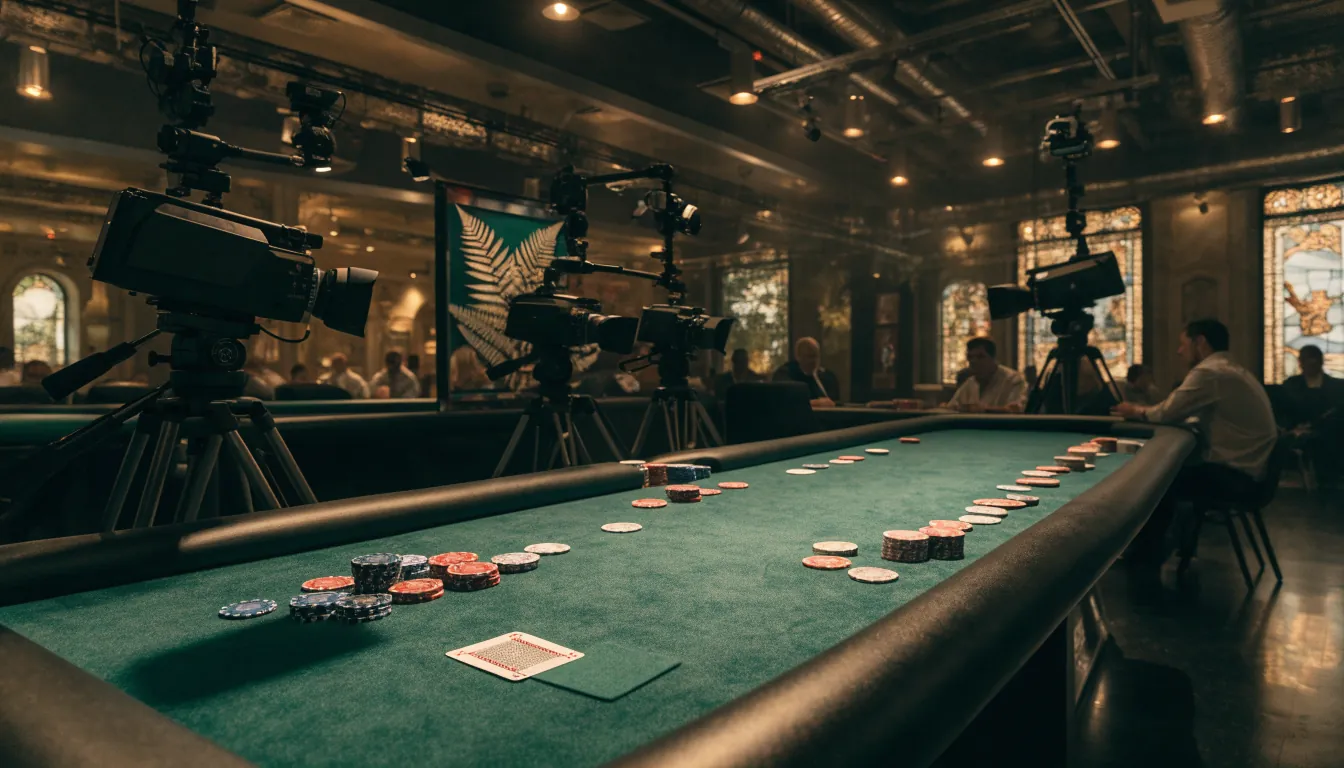
The hand closest to 9 wins. That gives baccarat a different feel from blackjack: you are not trying to improve your own hand by making a series of choices against a dealer. Instead, you select the outcome you think will prevail and let the hand play out. The possible results are a banker win, a player win or a draw.
The house edge depends on which side you back. For live dealer baccarat, the figure is around 1.06% for a banker bet and 1.24% for a player bet. As with roulette, these are long-run measures rather than guarantees about a particular hand. The banker figure is lower, but that does not ensure a banker win on the next deal.
Choosing between the three
If you want to make decisions during a hand, blackjack offers the clearest player-versus-dealer contest, though its live pace can include waits for others. Roulette is centred on selecting a wager before a spin, with the version of the wheel affecting the stated house edge. Baccarat keeps the main choice focused on backing the player hand, the banker hand or a draw.
For a practical comparison, look separately at what you must decide and at the relevant house-edge figure. The edge can help describe the mathematical cost of a wager over time, but it cannot tell you which result will come next. The game that feels easiest to follow is not automatically the one with the lowest edge, so consider both mechanics and odds before you play.
House Edge Comparison
House edges vary by game: European roulette is around 2.7%, American roulette is around 5.26%, and baccarat is roughly 1.06% for banker bets and 1.24% for player bets.
Using Bitcoin at a Live Casino
Bitcoin may be offered as a way to fund a live casino account, but its presence on a payment page does not tell you what the transaction will cost or how quickly it will be completed. A specialist review has described Bitcoin, Neteller and Skrill as methods that can support fast deposits or withdrawals, while also noting that limitations or fees may apply. Treat that as a report about the payment options it examined, not as a promise about every casino or a guarantee for your transaction.
Before sending Bitcoin, check the operator’s current payment terms and the details shown in its cashier. Confirm that Bitcoin is accepted for the transaction you intend to make, and read the conditions for both deposits and withdrawals. A method appearing in a general list does not necessarily mean it is available for every account or every kind of payment. If the terms are unclear, ask the operator to clarify them before you transfer funds.
Pay particular attention to fees and restrictions. The charge may be described in the payment terms, shown during the transaction, or applied under conditions that differ between deposits and withdrawals. Check who is responsible for any fee and whether the operator sets conditions on the amount or use of a Bitcoin payment. Do not assume that a fast payment method is free of charges or that the same conditions apply in both directions.
Speed needs the same care. The specialist review’s description of fast transactions is not a fixed processing time for a particular live dealer casino. It does not establish when a deposit will appear in your playable balance or when a withdrawal will reach you. Those steps may be treated separately in an operator’s terms, so look for the stated process rather than relying on a broad description of Bitcoin as fast. If you need the money by a particular time, do not base that decision on a general claim.
Keep your payment records. Save the terms you relied on and any confirmation or transaction details provided during the transfer. If something does not match what the operator described, those records can help you explain the issue when contacting support. Avoid making another payment to solve a problem until you understand whether the first transaction has been recognised and what the operator says is required.
Bitcoin is one option to assess, not a reason by itself to choose a casino. Compare the payment conditions with what you are comfortable using, and pause if a fee, restriction or processing step is not clear. The live table does not change the payment terms: whether you are joining a live croupier game or another casino game, the relevant details are the operator’s current rules for Bitcoin transactions. A cautious check before transferring funds is more useful than assuming that a method described as fast will suit your situation.
What to Check on a Live Casino Site
Before you use a live casino site, check whether it supports New Zealand dollars for both deposits and withdrawals. Many operators allow transactions in NZD, but that does not mean every site does, or that every payment method on a site handles the currency in the same way.
Look for clear information about the currency used for your account balance and for transactions. A balance displayed in NZD is useful, but it does not by itself confirm that you can deposit and withdraw in that currency. If the site’s wording is unclear, check its payment terms or ask customer support before depositing. You want to know whether NZD applies at both ends of the transaction, not just on the screen.
Be precise about what you are checking. A site might support NZD deposits but describe withdrawals separately, or present currency options that depend on the payment method selected. Confirm the terms that apply to your intended method rather than assuming that a general statement about NZD covers every transaction. If you cannot find a definite answer, treat the currency support as unconfirmed.
This is a practical comparison point when assessing live casino sites, but it is not a verdict on the quality of their tables or service. Supporting NZD can make the account’s financial information easier for you to read. It does not establish that a site is suitable in other respects. Equally, a site’s live dealer offering tells you nothing on its own about which currencies it accepts.
Take care with labels such as “local currency” or “NZD supported.” Check what those words refer to: the account balance, deposits, withdrawals, or all three. If the site gives different information in separate sections, ask for clarification and keep the answer with the relevant terms. That gives you something specific to rely on instead of interpreting a broad promotional claim.
A short check before registering can prevent confusion later. Confirm that NZD is available for the transaction you plan to make, and that the same currency is supported for the withdrawal route you expect to use. Do not infer full NZD support from a currency symbol, a balance display, or the fact that the site accepts players from New Zealand. Currency handling is a separate detail.
There is no need to treat one currency feature as a universal measure of the best live casino site for New Zealand. The useful question is narrower: can you manage your balance in NZD for the deposits and withdrawals you intend to make? Many operators support those transactions in New Zealand dollars, but you should verify the position for the particular site and payment method you are considering.
Playing Live Casino Games from New Zealand
Choosing a live casino in New Zealand is easier when you can see what is actually known about each option. Use these brief verdicts as a starting point and check the details that matter to you before deciding.
License: Malta Gaming Authority, licence no. MGA/B2C/370/2017 Play Grand is listed with a Malta Gaming Authority licence, number MGA/B2C/370/2017. You can use that licensing detail as a point of reference when assessing the operator.
Payout speed: 1-3 business days Lamabet’s stated payout speed is 1–3 business days. You can consider that timing when deciding whether it suits your needs.
License: Tobique Gaming Commission, licence no. 0000064 Neospin is listed with a Tobique Gaming Commission licence, number 0000064. You can refer to the licence information when reviewing the operator.
License: Tobique Gaming Commission, licence no. 0000002 Ricky Casino is listed with a Tobique Gaming Commission licence, number 0000002. You can use this detail as part of your review.
License: 07017519840 · Payout speed: 1-3 business days Zotabet has the identifier 07017519840 and a stated payout speed of 1–3 business days. You can take both details into account when considering it.
Payout speed: 1-3 business days Wintino’s stated payout speed is 1–3 business days. You can use this information to judge whether the listed timing works for you.
License: Curaçao Gaming Authority, licence no. OGL/2024/165/0185 BitStarz is listed with a Curaçao Gaming Authority licence, number OGL/2024/165/0185. You can refer to this licensing information when assessing the operator.
License: Tobique Gaming Commission, licence no. 0000091 7Bit Casino is listed with a Tobique Gaming Commission licence, number 0000091. You can use that information as one reference point in your review.
License: Malta Gaming Authority, licence no. MGA/B2C/394/2017 N1 Casino is listed with a Malta Gaming Authority licence, number MGA/B2C/394/2017. You can refer to the licence detail when considering the operator.
Kiwi players can access live dealer games through international or offshore gambling sites. The absence of a domestic online-casino licensing framework does not mean that you are prohibited from visiting those platforms or playing there. Player access and the rules governing casino operators are separate issues.
That distinction matters when you assess what an offshore site offers. A live table may be available to someone in New Zealand, but it is not thereby a locally licensed service. Before you create an account or deposit money, check which gambling authority regulates the operator and whether its licence can be confirmed. The Department of Internal Affairs can also be consulted about an operator’s licence status.
There is no Kiwi-specific gambling licence. So, when a site describes itself as licensed, look at the actual regulator and the scope of the licence rather than assuming the claim means it holds approval from a New Zealand authority. A foreign licence is not the same as domestic oversight, and a player using an offshore website has not had the same local government recourse that comes with a domestically supervised service.
Attention: Gambling with an offshore operator may leave you without domestic government recourse if a dispute arises.
The practical position is therefore neither that online live play is blocked for Kiwis nor that every accessible site is locally regulated. You can play live dealer games at offshore platforms, but access alone tells you little about the operator’s oversight. Take time to check the regulator and licence before deciding whether to use a site, and keep in mind that gambling with an offshore operator may leave you without domestic government recourse if a dispute arises.
This is a useful distinction if you are comparing ways to play live casino games online from New Zealand: the stream and table may be available, while the operator remains outside the country’s domestic licensing framework. Consider those two points separately rather than treating availability as proof of local approval.
Real-Money Play and the Limits of Free Live Games
If you want to play live casino games online, do not assume you can try every table in a free-play mode first. Live dealer games are typically not offered for free because operating a live table brings significant costs for a casino. That makes them different from games that can be presented without a live dealer and studio operation.
The distinction matters before you join a table. A free version, where one is available, can let you get a feel for the interface, but it may not be offered for the live game you want. Check what the site actually makes available rather than treating free access as a standard feature. If there is no free mode, you may have to decide whether to play for real money or leave the table.
Real-money play carries a direct financial consequence: each wager can affect your balance. Take a moment to understand the table’s terms and the amount you are prepared to risk before you begin. Do not treat the absence of a free option as a reason to deposit, or assume that a real live casino table is simply a free trial with a different label.
If you are not ready to risk money, stepping away is a sensible choice. Free access is not guaranteed, and the live format’s operating costs help explain why. A clear decision before joining is more useful than expecting every live game to provide a no-cost way to play.
Betting Windows at Live Tables
At a live table, betting is controlled by a window that opens before a round and closes when play is about to begin. You have to place or adjust your wager while that window is active. Most live games allow only a limited time for this, so rounds move at a quicker pace than a game with no live dealer and shared table activity.
The on-screen countdown is the clearest cue. Once it reaches zero, the betting controls close and you cannot add to that round. If you are still deciding, take care not to leave the choice until the final moments: a brief delay, an interrupted connection or simply missing the cutoff can mean sitting out. The next opportunity comes with a later round, not by reopening the one that has started.
Betting Window Steps
- Determine your intended stake and selection
- Wait for the betting window to open
- Place your wager before the countdown reaches zero
- Confirm the wager appears on screen
Timing can also matter after bets are closed. Some live baccarat tables set specific time limits for playing hands. That means the sequence has a defined pace, rather than allowing every decision to remain open indefinitely. Check the table information before joining so you know whether the timing applies to your hand and can follow the prompts without rushing.
If you want to bet live at a casino, treat the displayed timer as part of the table’s rules, not a suggestion. Keep your intended stake and selection in mind before the betting window opens, then confirm that the wager appears on screen before it closes. The exact interval can differ between games and tables, so follow the countdown shown in the game rather than assuming every round gives you the same amount of time.
This pace is worth considering before you settle in. A faster betting cycle may suit you if you are ready to decide promptly; if you prefer more time to pause between choices, select a table whose displayed timing feels manageable.
Live Tables on Mobile and How Card Scanning Works
A mobile live table brings the physical game to a smaller screen, but the software still has to reflect what happens at the table. In live blackjack, a barcode scanner helps maintain that connection. Markings or chips embedded in the cards are read as they are handled, allowing the game software to register the physical cards and show the corresponding information on screen.
This link matters because the digital display is not a separate version of the hand: it needs to follow the cards dealt at the table. If the scanner does not read a card correctly, or the software does not update as expected, the displayed game may not match the action you can see. The scanning system is there to keep those records aligned, rather than to change the rules of blackjack.
On a phone, you may be watching the table and the game information in a compact layout. Take a moment to check that the cards shown in the interface appear consistent with the live action before continuing. If the display seems out of step, avoid making assumptions about what has been recorded; pause and use the table’s available support or help options.
Technical problems can occur with live dealer games. A specialist review has reported this possibility, but it should not be read as a claim that every mobile table has a recurring fault. If a stream or game interface stops behaving as expected, wait for it to recover or seek assistance rather than treating an unclear screen as confirmation of a result. The scanner supports the link between cards and software, but it cannot prevent every technical interruption.
How Long Live Casino Withdrawals Can Take
A specialist casino review reports markedly different withdrawal estimates by payment method: crypto payouts may clear in under an hour, POLi and e-wallet payments are listed at 24 to 48 hours, while bank transfers are given a timeframe of 5 to 7 business days. These are figures reported by that review, not a reliable promise that every live casino will pay within those windows.
If a fast withdrawal matters to you, compare the payment method and the operator’s stated terms before depositing. A headline timeframe alone does not establish how long a particular cash-out will take, so check what the site says for your chosen method and whether any conditions apply. Avoid assuming that a crypto option will automatically be quicker at every operator: the under-an-hour estimate comes from a single review and may not reflect another site’s process.
The spread between the reported estimates is still useful as a starting point. The review places crypto ahead of POLi and e-wallets, with bank transfers taking the longest. But treat those timings as a comparison from that source, not as a market-wide standard. If the operator does not clearly state its withdrawal timeframe, do not rely on another site’s estimate as though it applied to your account.
Can New Zealand players play real-money live dealer games at offshore casino sites?
Yes, New Zealand players can access live dealer games at offshore sites. Choose a site regulated by a recognised gambling body and check its licence status with the Department of Internal Affairs; from 1 December 2026, the new approval rules govern which operators may legally accept Kiwi players.
How do live casinos work?
A live casino streams a real dealer playing with physical cards, wheels or other equipment from a studio or casino. You follow the video feed and place bets through the online interface, with the game and dealer interaction happening in real time.
How fast do live casino withdrawals arrive?
Crypto payouts often clear in under an hour, while POLi and e-wallet withdrawals typically take 24 to 48 hours. Bank transfers can take 5 to 7 business days.
Prepared by the Casino Insider NZ editorial staff.